Editorial Team · October 18, 2026 · 11 min read
Drain & Sewer Tips / how-to
Last Updated: October 17, 2026
Sewer line damage often starts small. A crack here, a slow drain there. Most homeowners ignore these early signs until the problem becomes catastrophic. By then, avoiding expensive sewer line replacement becomes impossible.
The truth is simple: early detection saves thousands of dollars.
Common warning signs appear months before a full backup occurs. Slow drains in multiple fixtures. Frequent backups in your lowest drains. Soggy patches in your yard. Sewage odors near the foundation. These aren't minor inconveniences, they're your sewer line's distress signals.
The difference between a repair and a replacement often comes down to timing.
Catch these red flags early:
Don't wait for a full backup. Call a professional the moment you notice any of these signs.
A small crack in your sewer line can be sealed or repaired without excavation. A fully collapsed line requires digging up your yard and replacing the entire section. The cost difference is dramatic, and so is the disruption to your property.
Early intervention also prevents damage to your home's foundation and landscaping. Water leaking from a broken sewer line saturates soil beneath your foundation, causing settling and cracks. Tree roots invade the line through small breaks, making the problem worse over time.
The key is acting before the damage cascades. One crack becomes two. Two becomes a collapse. By then, avoiding expensive sewer line replacement is no longer an option.
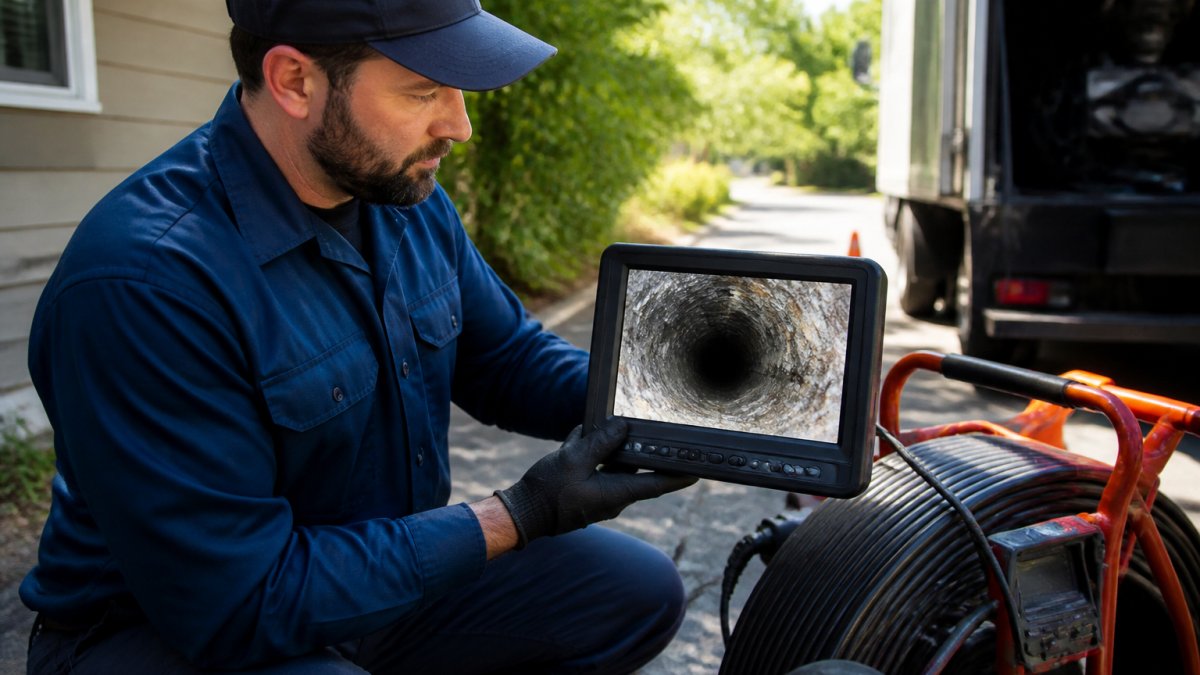
A sewer camera inspection is the most accurate way to see what's actually happening inside your line. Instead of guessing based on symptoms, a professional can show you exactly where the problem is and how severe it is.
Rodding your line clears clogs mechanically, but it tells you nothing about the condition of your pipes. A camera shows everything:
When you know exactly what's wrong, you can make informed decisions about repair versus replacement. Many homeowners discover their line doesn't need replacement at all, just targeted cleaning or a localized repair.
The camera footage becomes your roadmap. If the damage is localized to one section, trenchless repair or spot excavation may work. If the line is deteriorating along its entire length, replacement might be the only practical option.
Professional inspections also catch problems before they cause backups. Tree roots at the entry point can be treated. Grease buildup can be cleaned. Catching these early means avoiding expensive sewer line replacement later.
Regular cleaning prevents most sewer line emergencies. Hydro jetting uses high-pressure water to blast away buildup, grease, and roots that slow your line. Unlike traditional rodding, which clears the blockage but leaves residue behind, hydro jetting cleans the pipe walls completely.
A clogged line doesn't always mean a broken line. Often, it means buildup has narrowed the pipe so much that water can't flow properly. Hydro jetting removes this buildup and restores full flow.
Tree roots are common in Colorado Springs, especially in older neighborhoods. Small roots can be removed with hydro jetting before they cause serious damage. Waiting until roots have cracked the pipe means excavation and repair become necessary.
Grease and mineral scale accumulate over years. Regular cleaning keeps these deposits from hardening into permanent blockages that require expensive removal.
Most homeowners benefit from regular cleaning if they have older pipes or recurring issues. Restaurants and commercial properties in Colorado Springs should clean more frequently, depending on use.
If your line hasn't backed up in years, regular inspection and hydro jetting can be beneficial. The goal is catching problems while they're still manageable.
Not every sewer line problem requires replacement. Understanding when repair is possible versus when replacement is necessary helps you plan your budget and timeline.
Localized damage, a single crack, a small area of root intrusion, a section with sagging, can often be repaired without replacing the entire line. Trenchless repair methods work well for these situations.
If the damage is confined to one area, repair is often the right choice. The pipe material is still sound elsewhere; only the damaged section needs attention.
Drain Plumber Pro uses camera inspection to determine exactly which repairs will work. Sometimes what looks like a major problem is actually fixable with targeted intervention.
If your line is severely deteriorated along most of its length, or if it's showing multiple failure points, replacement is often more cost-effective than repeated repairs.
Multiple breaks, extensive root damage, or structural collapse all point toward replacement. Attempting repairs on a line this compromised means you'll be calling for service again in months.
Trenchless sewer repair methods have revolutionized how professionals handle sewer line problems. Instead of digging a trench across your yard, these methods repair the line from inside.
Pipe bursting and pipe lining are the two main trenchless approaches. Pipe lining inserts a new liner inside the existing pipe, sealing cracks and restoring flow. Pipe bursting breaks the old pipe while simultaneously laying new pipe in its place.
Both methods work best for localized damage. If your line has multiple problem areas spread across its length, trenchless repair becomes less practical. The damage pattern determines which method, if any, will work.
Trenchless repair requires minimal digging. Your yard stays mostly intact. Landscaping doesn't need replacement. The repair happens faster.
Traditional excavation means digging a trench sometimes 4-6 feet deep across your entire yard. Landscaping gets destroyed. Hardscaping cracks. Utilities get exposed. Restoration after the repair takes weeks.
Trenchless methods require only small access points. Your yard remains usable. The repair completes quickly. This is why avoiding expensive sewer line replacement through trenchless methods makes financial and practical sense.
However, trenchless repair works only for certain damage patterns. Your camera inspection determines whether it's an option for your specific situation.
Two problems account for most sewer line emergencies in Colorado Springs: tree roots and grease accumulation. Both are preventable with proper maintenance.
Tree roots seek moisture. A small crack in your sewer line is like a beacon to them. Roots enter the crack, grow inside the pipe, and eventually cause serious blockages or breaks.
Prevention starts with knowing where trees are planted relative to your sewer line. Avoid planting trees directly over your line. If mature trees already exist nearby, regular camera inspections catch root intrusion early, when it's still treatable.
Root barriers, physical or chemical, can slow root growth toward your line. Professional treatment of roots caught early prevents them from becoming a major problem.
Grease solidifies as it cools. Pouring cooking oil down your drain seems harmless, but it accumulates in your pipes over time, trapping other debris and narrowing the line.
Don't flush:
These items don't break down in your sewer line. They accumulate, harden, and eventually cause blockages. Regular hydro jetting removes buildup before it becomes a problem.
Most homeowners don't intentionally damage their sewer lines. But certain behaviors and decisions accelerate problems.
Ignoring early signs is the biggest mistake. That slow drain isn't going to fix itself. It's a warning. Acting on it costs far less than waiting for a full backup.
Trying DIY repairs on main sewer line problems often makes things worse. Renting a snake and attempting your own clearing might push a blockage deeper into the line or damage the pipe further. Professional diagnosis prevents costly mistakes.
Choosing a service call that doesn't include thorough diagnosis can backfire. A plumber who doesn't use camera inspection to verify the problem might recommend unnecessary replacement when repair would work. You could end up paying more for a solution you didn't need.
Delaying maintenance because your line "seems fine" is another trap. Regular inspection and cleaning catch problems early. Waiting until failure occurs means emergency pricing and more extensive damage.
Sewer problems don't resolve on their own. A slow drain today becomes a backed-up toilet tomorrow, then a flooded basement next week. The solution is simple: catch problems early, diagnose accurately, and repair before replacement becomes necessary.
Drain Plumber Pro serves Colorado Springs with 24/7 emergency response and same-day service. We use advanced sewer camera inspection to diagnose issues accurately, hydro jetting to clean lines without excavation, and trenchless repair methods to minimize disruption to your property. Request service today and avoid the cost and hassle of a full sewer line replacement.
Early detection and preventative maintenance are your best defenses against expensive sewer line replacement. Get a sewer camera inspection to identify problems while they're still repairable. Schedule regular sewer line cleaning every 18-24 months if you have older pipes or tree roots nearby. Address clogs immediately rather than ignoring backups. Avoid flushing grease, wipes, and non-degradable items. Many homeowners avoid replacement by catching issues at the repair stage through professional inspections and prompt action.
Yes, many sewer line problems can be repaired without full replacement. Cracks, root intrusions, and scale buildup often respond well to trenchless repair methods like pipe lining or spot repairs. Even broken sections can sometimes be patched rather than replaced. A sewer camera inspection will show exactly what damage exists and whether repair is viable. The key is catching the problem early. Once pipes collapse completely or have extensive damage across long sections, replacement becomes necessary.
Rodding or snaking clears the immediate blockage but leaves you blind to the underlying cause. Sewer camera inspection shows the actual pipe condition: cracks, root intrusion, scale buildup, misalignment, or corrosion. This helps prevent recurring clogs. A camera reveals whether roots are the problem (requiring root treatment, not just removal), whether pipe lining is an option, or whether you genuinely need excavation. Without this diagnosis, you're guessing at repairs.
Preventative cleaning schedules depend on your pipe age and conditions. Homes with trees near the sewer line should consider regular cleaning. Older homes with cast iron or clay pipes benefit from periodic cleaning. Restaurants and commercial kitchens often need more frequent cleaning due to grease buildup. If you've had recurring backups, regular cleaning may be necessary until the root cause is fixed. A professional can recommend a schedule based on your camera inspection results and history.
Free estimates. Camera-verified answers. 24/7 emergency drain service.
Request ServiceCall (719) 639-4137