In the right hands, yes — for most older lines. The answer depends entirely on pipe material and current condition, which is why the camera goes in before the jetter does.
Call Now — (719) 639-4137Request Service"Old pipe" isn't one thing. A 1955 cast iron line with sound walls and a scale ring is a great jetting candidate — cleaning it restores capacity it hasn't had in decades. A 1972 Orangeburg line that's already ovaled and blistering is not. Both are "old." Only a camera tells you which one you have.
Pressure is a tool, not a setting we leave on maximum. Sewer jetting typically runs somewhere between 1,500 and 4,000 PSI, and flow volume matters as much as pressure for carrying debris out. On fragile lines we drop pressure, change to a gentler flusher nozzle, and make more passes instead of hitting it harder.
Strong in compression, brittle at the joints, and joined every few feet — which is exactly where roots enter. Sound clay jets beautifully and the fine root hairs come out of the joint with it. Cracked or offset clay needs lower pressure and a decision about repair, because cleaning won't fix geometry. Spot repairs on clay are routine for us.
Scales heavily, especially with hard Front Range water, and corrodes from the inside out. Jetting removes the scale and can restore most of the original diameter — a big win. The risk is channeling: when corrosion has eaten the bottom of the pipe thin, the wall may not have material left to protect. Camera footage shows channeling clearly; if we see it, we tell you the line is on borrowed time regardless of cleaning.
Layered tar paper, essentially. It absorbs water, softens, blisters inward, and deforms into an oval. We do not jet failing Orangeburg — it's not a cleaning problem, it's a replacement project. See excavation drain repair.
Smooth, durable, and very jet-friendly. Failures here are usually installation issues — a belly from poor bedding, a joint pulled apart by soil movement, or crushing from equipment or settlement. Jetting cleans them fine; it cannot lift a sag out of a pipe.
Found in older homes on small-diameter drain branches. These scale badly and are often too deteriorated for aggressive cleaning. Low pressure, careful nozzle choice, or replacement of the branch is the honest path.
Saying no to a job we could bill for is cheaper for you than a jetted line that backs up again in a month. That's the whole reason we camera first: sewer camera inspections.
If you live in the Old North End, Patty Jewett, Ivywild, Knob Hill, or anywhere else with mature trees and pre-1970s infrastructure, your line is probably clay or cast iron — both jettable when sound, both worth inspecting before anyone cleans them. If you're in a newer subdivision in Briargate, Banning Lewis, or out toward Falcon, you're likely on PVC, where the question is almost never "can it take jetting" and almost always "why is it clogging" — typically grease, wipes, or a belly.
Either way, you should see footage before and after. Call (719) 639-4137 or request service and we'll show you exactly what you have.
See our hydro jetting service in Colorado Springs →
We handle this problem every week across the Pikes Peak region: Colorado Springs, Monument, Larkspur, Castle Rock, Castle Pines, Peyton, Woodland Park, Fountain, Manitou Springs, Security-Widefield, Falcon, Black Forest, Palmer Lake, Cimarron Hills, Stratmoor Hills.
A sound clay pipe handles jetting well. A clay pipe already cracked, offset at a joint, or held together by root mass can lose material during any cleaning — cable or jet. That's why we camera first and choose pressure and nozzle accordingly.
We generally will not jet deteriorated Orangeburg. It's a tar-impregnated fiber conduit that blisters and delaminates with age; pressure accelerates the failure. If the camera shows Orangeburg in poor shape, the answer is replacement.
Ask for the before and after camera footage and the pipe material they identified. A crew that can tell you the material, the defects, and what pressure they used is a crew that looked. One that can't didn't.
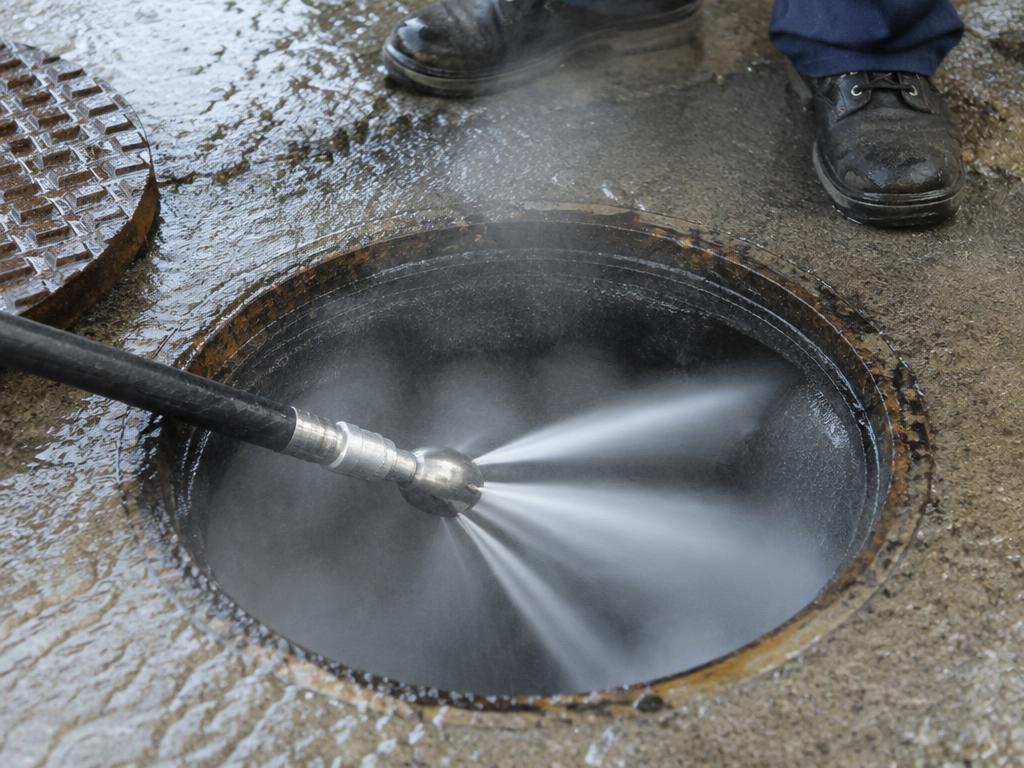
How high-pressure water actually cleans a sewer line, what the equipment does, and when it's the right call.
Read More →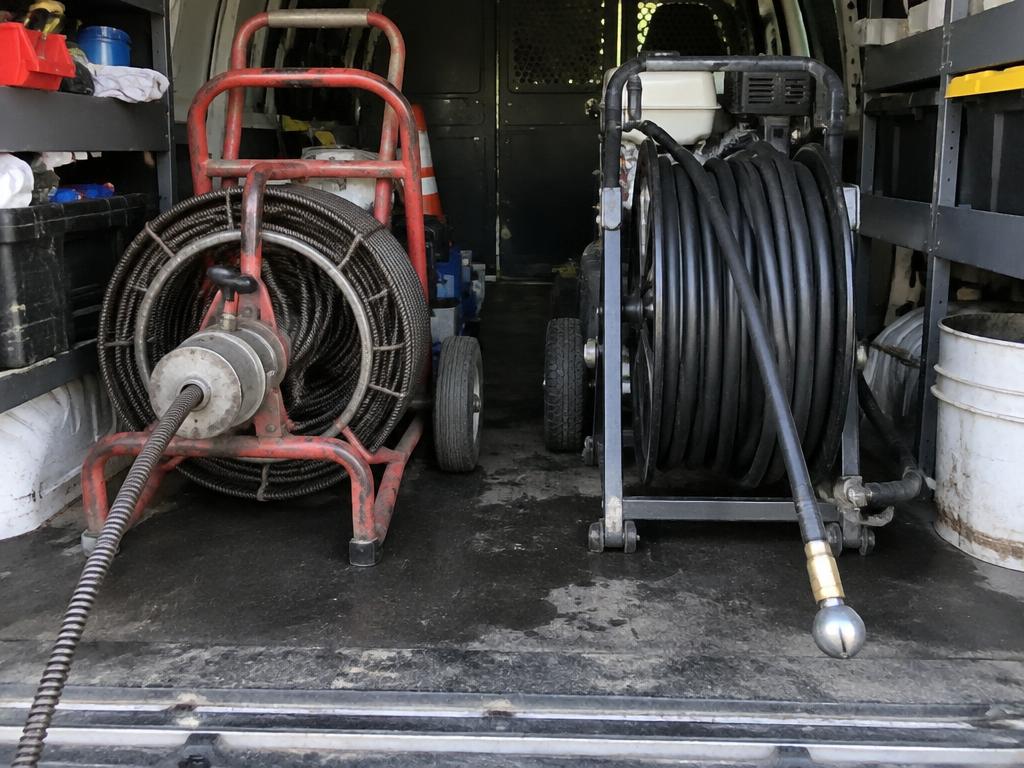
Two very different tools. One punches a hole through the clog, the other cleans the pipe wall to wall.
Read More →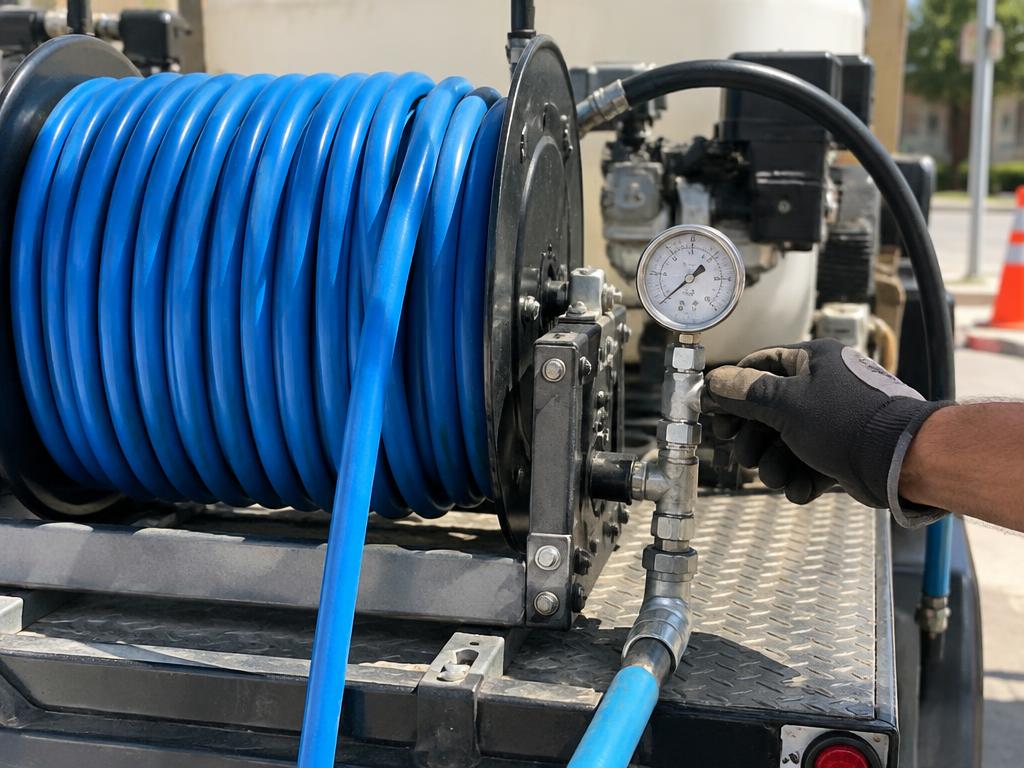
What drives the price up or down, what's included, and how to avoid paying for jetting you don't need.
Read More →Free estimates, camera-verified results, and 24/7 emergency response across Colorado Springs and the Front Range.
Call Now — (719) 639-4137Request Service