
A sewer camera turns guesswork into footage. Here's exactly what shows up on the screen, what each finding means, and why it should come before you approve any repair.
Call Now — (719) 639-4137Request ServiceGuides / Sewer Camera Inspections
Everything else about a sewer line is inference. Symptoms above ground suggest a cause; a camera confirms it. That distinction is the difference between a $200 cleaning and a $12,000 dig — and it's why we won't recommend excavation on anything but footage.
On screen: white or tan hair-like strands entering at a joint, or a dense mat filling the pipe. Extremely common in older Colorado Springs neighborhoods with mature trees. What it means: cutting plus hydro jetting now, and a maintenance interval going forward. If roots have displaced the joint, repair.
On screen: standing water that doesn't drain, with the camera partially submerged for a stretch, then clear pipe beyond. What it means: the pipe has settled — Colorado's expansive clay soil does this. Cleaning restores flow; only re-grading fixes the slope. Mild bellies are managed with periodic jetting for years.
On screen: a visible ledge where one pipe section has shifted out of alignment with the next. What it means: a permanent catch point for solids and paper. Small offsets are livable; large ones need the section replaced.
On screen: dark lines along or around the pipe, sometimes with soil or gravel visible inside the line. What it means: soil is entering and wastewater is leaving. This will get worse. Plan a repair.
On screen: a rough, rusty, bumpy interior in cast iron rather than a smooth wall. What it means: decades of hard water. Descaling with a jetter restores diameter; if the wall has thinned to failure, replacement.
On screen: the picture simply stops — a wall of soil, debris, or crushed pipe. What it means: excavation. We locate and mark the spot so the dig is a small targeted hole instead of a trench across your yard.
On screen: a smooth, pale coating narrowing the pipe, often with a channel bored through it from a previous cabling. What it means: jetting, and a habit change or a commercial maintenance schedule.
Even with no defects, the inspection tells you what you own: clay, cast iron, Orangeburg, or PVC; 4-inch or 3-inch; how far to the city main; and where the transitions sit. If you're buying a house, that alone is worth the visit.
See our Colorado Springs sewer camera inspection pricing guide, or read more about the inspection service itself. Free estimates throughout Colorado Springs and the surrounding communities.
See our sewer camera inspections service in Colorado Springs →
We handle this problem every week across the Pikes Peak region: Colorado Springs, Monument, Larkspur, Castle Rock, Castle Pines, Peyton, Woodland Park, Fountain, Manitou Springs, Security-Widefield, Falcon, Black Forest, Palmer Lake, Cimarron Hills, Stratmoor Hills.
Yes. The camera head carries a transmitter we trace from the surface, so we can mark the location and depth of a defect in your yard before anyone digs.
No. The line has to be open first. That's why we clear the line, then inspect — a camera pressed against a root mass only shows you a root mass.
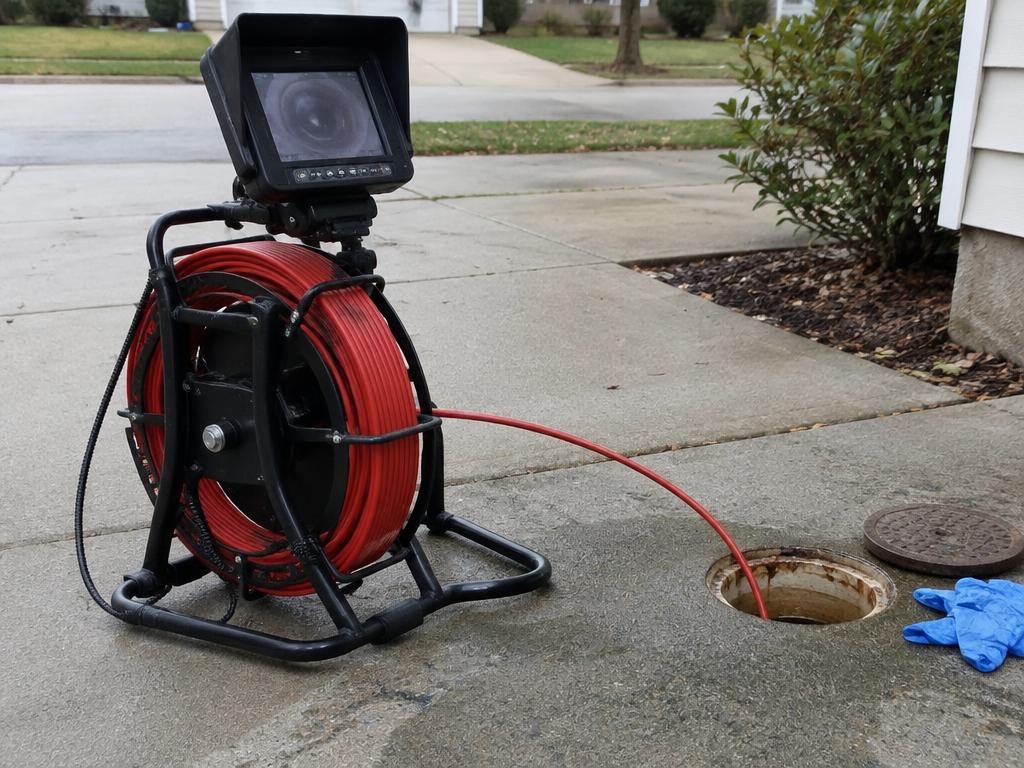
You watch it live on the monitor with us, and we narrate what you're looking at. We can also provide a copy for a home sale, insurance claim, or a second opinion.
It shows the defect that causes the leak — a crack, an open joint, an offset. Water escaping through pipe wall isn't visible directly, but the opening it escapes through is.
Standalone scopes, pre-purchase inspections, and inspections bundled with cleaning — what each should run.
Read More →Free estimates, camera-verified results, and 24/7 emergency response across Colorado Springs and the Front Range.
Call Now — (719) 639-4137Request Service