
A sewer that backs up twice a year is telling you something. The blockage is a symptom — here are the five causes behind almost every recurring backup we see in Colorado Springs, and how to tell them apart.
Call Now — (719) 639-4137Request ServiceWhen a line backs up, the natural instinct is to get it flowing again. A cable goes down, water drains, everyone's relieved. But a cable bores a channel through the obstruction — it doesn't remove the thing that caused the obstruction to form. Which is why the call comes again in three months, then two, then six weeks.
Fixing a recurring backup means answering a different question: what is in this pipe that keeps catching waste? There are five common answers.
This is the number one repeat cause in older Colorado Springs neighborhoods — the Old North End, Patty Jewett, the Westside, Ivywild, and much of Manitou Springs. Clay tile and cast iron have joints every few feet, and in a dry climate a sewer line is the most reliable water source in the yard. Roots find the joint, thread in as hairs, and grow into a mat that behaves like a strainer.
Tell-tale sign: gradual slowing over weeks, then a total stoppage, on a seasonal rhythm. Fix: mechanical cutting followed by hydro jetting to strip the remaining root hair, then camera verification of joint condition. Severe intrusion with displaced pipe becomes an excavation repair.
Kitchen waste cools and solidifies on the pipe wall, and soap scum layers over it. The pipe's effective diameter shrinks year after year until a normal amount of waste won't pass. Restaurants and any home that pours cooking fat down the sink live with this — see commercial drain cleaning.
Tell-tale sign: kitchen line specifically, slow but steady degradation, foul smell. Fix: jetting. Cabling through grease just makes a tunnel.
Colorado Springs water is hard, and hard water plus decades of cast iron produces tuberculation — a rough, mineral-crusted interior that snags everything. A 4-inch pipe can be functionally 2 inches.
Tell-tale sign: pre-1970 house, everything drains sluggishly all the time. Fix: jetting with a descaling head, or replacement if the wall has gone thin.
Colorado's expansive clay soils shift. When a section of lateral settles, it forms a low spot that holds standing water. Solids drop out there and accumulate. No amount of cleaning changes the slope.
Tell-tale sign: reliably recurring backup at the same footage mark every time. Fix: excavation and re-grading of that section. Jetting keeps it functional in the meantime, and honestly, that's a legitimate strategy for years if the sag is mild.
Cracks, offset joints where two pieces have shifted apart, and partial collapses all create a lip that catches waste. Soil and gravel also enter through the break, which is its own problem.
Tell-tale sign: gravel or soil in the water that comes back, cable snagging at a consistent spot, sinkholes or unusually green grass in the yard. Fix: repair or replacement of the failed section.
If the sewage is backing up right now, don't wait on the diagnosis — emergency service is available 24/7 across Colorado Springs and the surrounding areas.
See our drain cleaning service in Colorado Springs →
We handle this problem every week across the Pikes Peak region: Colorado Springs, Monument, Larkspur, Castle Rock, Castle Pines, Peyton, Woodland Park, Fountain, Manitou Springs, Security-Widefield, Falcon, Black Forest, Palmer Lake, Cimarron Hills, Stratmoor Hills.
Because cabling punches a hole through the blockage rather than removing it. Whatever is catching debris — a root mass, a scaled pipe wall, a low spot — is still there, so it refills on a predictable schedule.
Usually, when the pipe is structurally sound. Jetting scours the full diameter so there's nothing left for the next round of waste to catch on. If the cause is a belly or a break, jetting buys time but doesn't fix the geometry.
Yes. A repeat backup is exactly the case where footage pays for itself — it tells you whether you're managing a maintenance problem or postponing a repair.
Very often, yes. Mature cottonwoods, elms, and willows in older neighborhoods send roots straight toward the moisture in clay and cast iron joints. It's the single most common repeat cause we find here.
What a fixture clog, a main line clearing, and a jetting job actually cost here — and what drives the number up.
Read More →
Grease film, hard-water scale, roots, bellies, and venting — the six causes behind almost every repeat clog.
Read More →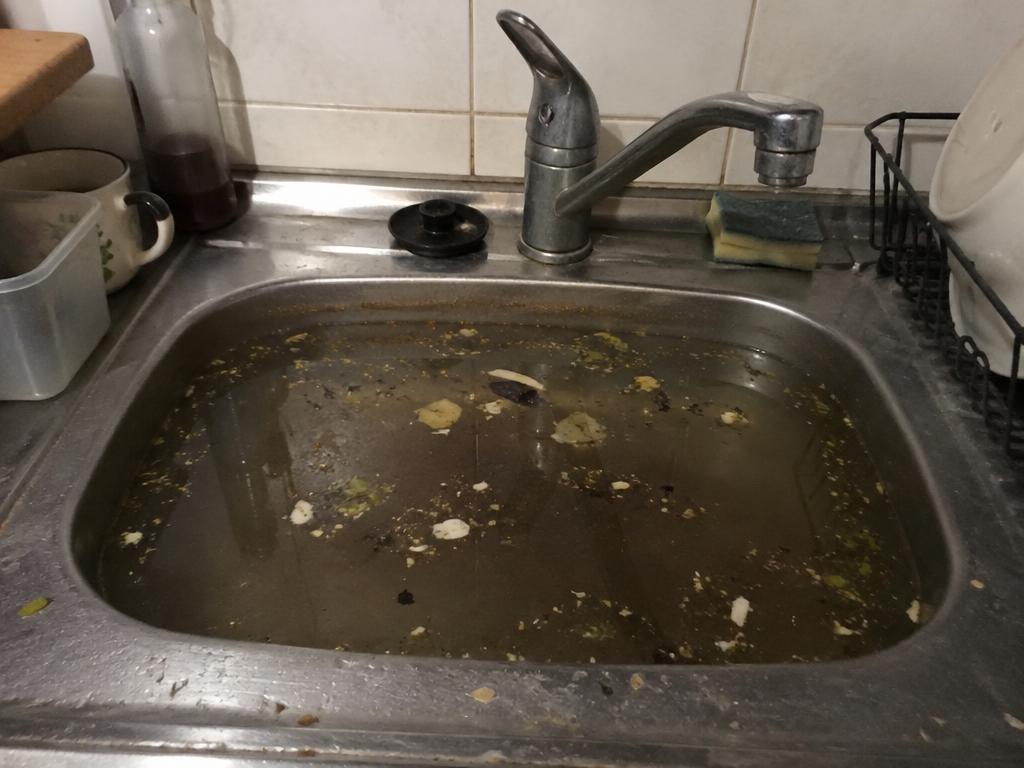
Grease, disposals, and double-sink traps — why kitchen lines clog and what actually clears them.
Read More →Free estimates, camera-verified results, and 24/7 emergency response across Colorado Springs and the Front Range.
Call Now — (719) 639-4137Request Service